
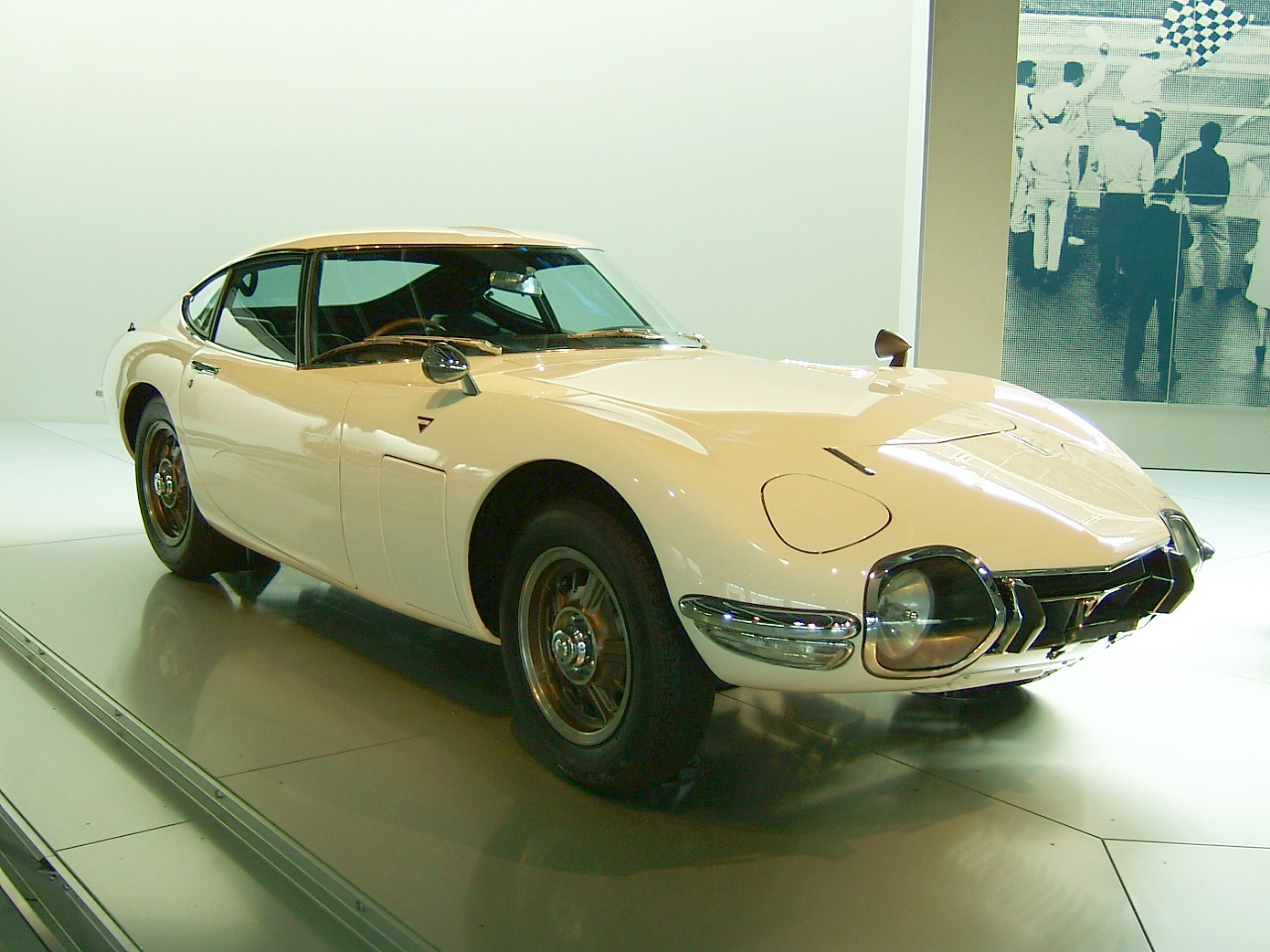
The Car That Changed Perceptions
In the early 1960s, Japanese cars were jokes in the Western automotive world. They were small, cheap, and seen as transportation for people who couldn't afford anything better. The idea that Japan could produce a car to rival the best from Europe was laughable.
Then came the Toyota 2000GT.
Produced from 1967 to 1970, with a total run of just 351 units (337 of which were sold to the public), the 2000GT wasn't just Japan's first great sports car. It was proof that Japanese engineering could reach the highest levels of automotive artistry. Today, these cars regularly sell for over $1 million at auction -- making the 2000GT one of the most valuable collector cars in the world, regardless of origin. The 2000GT's impact was immediate, shifting perceptions of Japanese craftsmanship and design virtually overnight.
A Partnership of Giants
The 2000GT was born from an unlikely collaboration between Toyota and Yamaha. The project began when Yamaha approached Nissan in the early 1960s with a proposal to jointly develop a high-performance sports car. When Nissan declined, Yamaha turned to Toyota, which saw an opportunity to elevate its brand image.
Toyota provided the base platform, design direction, and funding. Yamaha -- already renowned for its expertise in high-performance engines (the company builds everything from motorcycles to concert pianos) -- developed the engine and handled the majority of production at its factory in Iwata, Shizuoka Prefecture. Yamaha's assembly process was meticulous, with each car taking approximately two weeks to complete, reflecting the company's commitment to precision.
The result was a car that drew from the best of both companies: Toyota's resources and industrial discipline, combined with Yamaha's engine wizardry and handcrafted approach to manufacturing. This partnership not only produced the 2000GT but also set the stage for future collaborations between the two companies, culminating decades later in the V10 of the Lexus LFA.
Engineering Excellence
The 2000GT's specifications read like a challenge to European sports car orthodoxy:
Engine: 2.0-liter inline-six (3M) with a Yamaha-developed DOHC aluminum cylinder head. This was Japan's first production inline-six with a DOHC head -- technology that was cutting-edge even in Europe at the time. Output was 150 hp at 6,600 rpm, fed through three twin-choke Mikuni-Solex carburetors. The engine's redline was an impressive 7,000 rpm, showcasing its performance potential.
Chassis: A backbone frame with fully independent suspension all around -- double wishbones front and rear. The project was led by Toyota's Jiro Kono, whose team studied the best European sports cars before creating something they felt could match them. The car's low curb weight of approximately 2,469 pounds contributed to its nimble handling.
Body: A long, flowing design attributed to Toyota's Satoru Nozaki, with obvious inspiration from the Jaguar E-Type and Ferrari 275 GTB. The proportions -- long hood, short deck, flowing roofline -- are timeless. The slippery shape helped it to a claimed top speed of 135 mph.
Interior: Rosewood dashboard and center console, handcrafted by Yamaha's musical instrument division. The same craftsmen who built Yamaha grand pianos created the 2000GT's interior trim. The attention to detail extended to the leather upholstery, which was sourced from the finest materials available in Japan.

The James Bond Connection
The 2000GT appeared in the 1967 James Bond film You Only Live Twice, set in Japan. Because Sean Connery, at 6'2", couldn't fit into the coupe's low-slung cabin, Toyota built two custom open-top versions specifically for the film. These one-off roadsters are among the most coveted James Bond cars in existence; one survives restored in Japan.
The film appearance gave the 2000GT international visibility that Toyota's marketing budget alone could never have achieved. It introduced the car to a global audience and established the idea that Japan could produce a world-class GT car. This cinematic exposure was instrumental in establishing the 2000GT's enduring legacy and desirability among collectors.
Why Only 351?
The 2000GT was never intended to be profitable. Toyota priced it at 2.38 million yen -- roughly the cost of a house in Japan at the time, and significantly more expensive than the Porsche 911 or Jaguar E-Type it was benchmarked against. At that price, the car was a statement piece: proof of what Toyota could achieve when cost was no object.
Each car was essentially hand-built. Production averaged about 10 units per month, with Yamaha craftsmen assembling every car individually. The low volume was a function of manufacturing reality rather than a deliberate limitation. Yamaha's production capabilities were stretched to their limits, contributing to the car's exclusivity.
Production ended in August 1970, after 351 units (including prototypes and racing versions). Toyota had made its point. The company that would go on to build the Celica, the Supra, and the Lexus LS had proven it could also build one of the finest sports cars in the world.
Racing Pedigree
The 2000GT's competition history further burnished its legend. In 1966, before the production car was even released, 2000GTs entered the inaugural Suzuka 1000km endurance race and finished 1-2. The car subsequently set multiple speed and endurance records at the Yatabe test track, including a 72-hour continuous run at an average speed of over 128 mph.
These achievements weren't just impressive for a Japanese car -- they were impressive for any car of the era. The 2000GT also won the 1967 Fuji 24-Hour Race outright, further cementing its status as a formidable competitor on the track. This racing success played a crucial role in solidifying the 2000GT's reputation as a serious performance machine.
The Market
The 2000GT has achieved a rarefied status in the collector car world:
- In 2013, a 1967 2000GT sold for $1.155 million at RM Sotheby's Monterey auction -- making it the most expensive Japanese car ever sold at auction at the time.
- Prices have continued to climb, with exceptional examples approaching or exceeding $1.5 million in private transactions.
- Even project-condition 2000GTs are worth well into six figures, given the extreme rarity.
With only 337 road cars built and perhaps 250-280 believed to survive, the 2000GT is one of the rarest and most desirable post-war sports cars in existence. Its significance as Japan's first true sports car, combined with its engineering excellence, racing heritage, and extremely limited production, make it the cornerstone of any discussion about Japanese collector cars.
Buying Tips and Regional Market Differences
For collectors considering a 2000GT, provenance and condition are paramount. Originality is critical, as many cars have undergone extensive restoration. Matching numbers for engine and chassis can significantly influence value. Buyers should be wary of cars with non-original parts or those that lack comprehensive documentation.
Regional market differences also play a role in pricing. In the United States, demand is particularly strong. European buyers, however, have recently shown increased interest, driven by the car's racing pedigree and exotic appeal.
The Toyota 2000GT didn't just change how the world saw Toyota. It changed how the world saw Japan, setting the stage for the country's future automotive triumphs.