The Dream Made Affordable
Owning a Ferrari used to require serious wealth. It still does for the latest models, but the used market has created entry points that would have been unimaginable a generation ago. Three models consistently emerge as the most accessible paths to Ferrari ownership: the 308 GTS, the F355, and the 360 Modena.
Each represents a different era of Ferrari, a different price point, and a very different ownership experience. Let's compare them honestly.
Ferrari 308 GTS (1977-1985)
Engine: 2.9L V8, 205-240 hp (depending on spec) | Price range: $60,000-$120,000
The 308 GTS is the Ferrari that non-car people recognize — it's Magnum P.I.'s car. The Pininfarina-designed body is timelessly beautiful, the V8 sounds magnificent, and the car is small and light enough to feel genuinely sporting despite modest power outputs by modern standards.
Approximately 12,000 units of the 308 GTB and GTS were produced between 1975 and 1985, with the GTS accounting for the majority. The carbureted versions, produced until 1981, are particularly revered for their raw driving experience and simpler mechanics. Auction prices for well-preserved examples have seen a steady climb, with top condition models reaching up to $120,000, especially for the early carbureted versions.
Pros:
- Arguably the most beautiful Ferrari ever designed
- Mechanical simplicity means specialists can maintain it affordably
- The carbureted GTB/GTS (pre-1981) models are the most desirable
- Strong, active enthusiast community
- Appreciating asset — prices have been climbing steadily
Cons:
- Fuel-injected (Quattrovalvole) models can have complex electronic issues
- Performance is modest by modern standards (0-60 in ~7 seconds)
- Rust is the primary enemy, particularly in the tubular steel frame
- Parts are available but expensive
- Interior quality reflects 1970s Italian standards (charming but imperfect)
Best for: The collector who values beauty and history over outright performance. The 308 is a car you enjoy at 7/10ths, savoring the experience rather than chasing lap times.
Ferrari F355 (1994-1999)
Engine: 3.5L V8, 375 hp (380 PS) | Price range: $80,000-$110,000 (F1) / $120,000-$180,000 (manual)
The F355 is the connoisseur's Ferrari. Its 3.5-liter V8 revs to 8,500 rpm and produces what many consider the finest exhaust note in Ferrari history — a metallic wail that builds from a smooth idle to a spine-tingling crescendo. The gated 6-speed manual (on cars without the F1 automated gearbox) is one of the great shifters in automotive history.
With approximately 11,273 units produced, the F355 is a relatively common Ferrari by Maranello standards, but that doesn't diminish its appeal. The Berlinetta coupe is the most sought after, followed by the GTS and Spider. The manual transmission models, particularly in Berlinetta form, are increasingly coveted, with auction prices for pristine examples pushing $140,000.
Pros:
- One of the greatest engine notes ever produced by any car
- The gated manual is an unforgettable tactile experience
- Significantly faster than the 308 (0-60 in ~4.6 seconds)
- Beautiful Pininfarina design
- Still relatively affordable for what it offers
Cons:
- Maintenance costs are legendary. The cam belt service, required every 5 years or 30,000 miles, involves pulling the engine and typically costs $8,000-$15,000 at a specialist. The valve service (every 30,000 miles) is similarly expensive.
- The F1 gearbox (1997-1999) is slow and jerky by modern standards. Buy the manual.
- Engine-out services mean any major work is a significant event
- Sticky interior surfaces (a common issue with 1990s Ferraris)
Best for: The enthusiast who wants the most emotionally engaging Ferrari experience and is prepared for the financial commitment of proper maintenance. The F355 rewards those who treat it right.
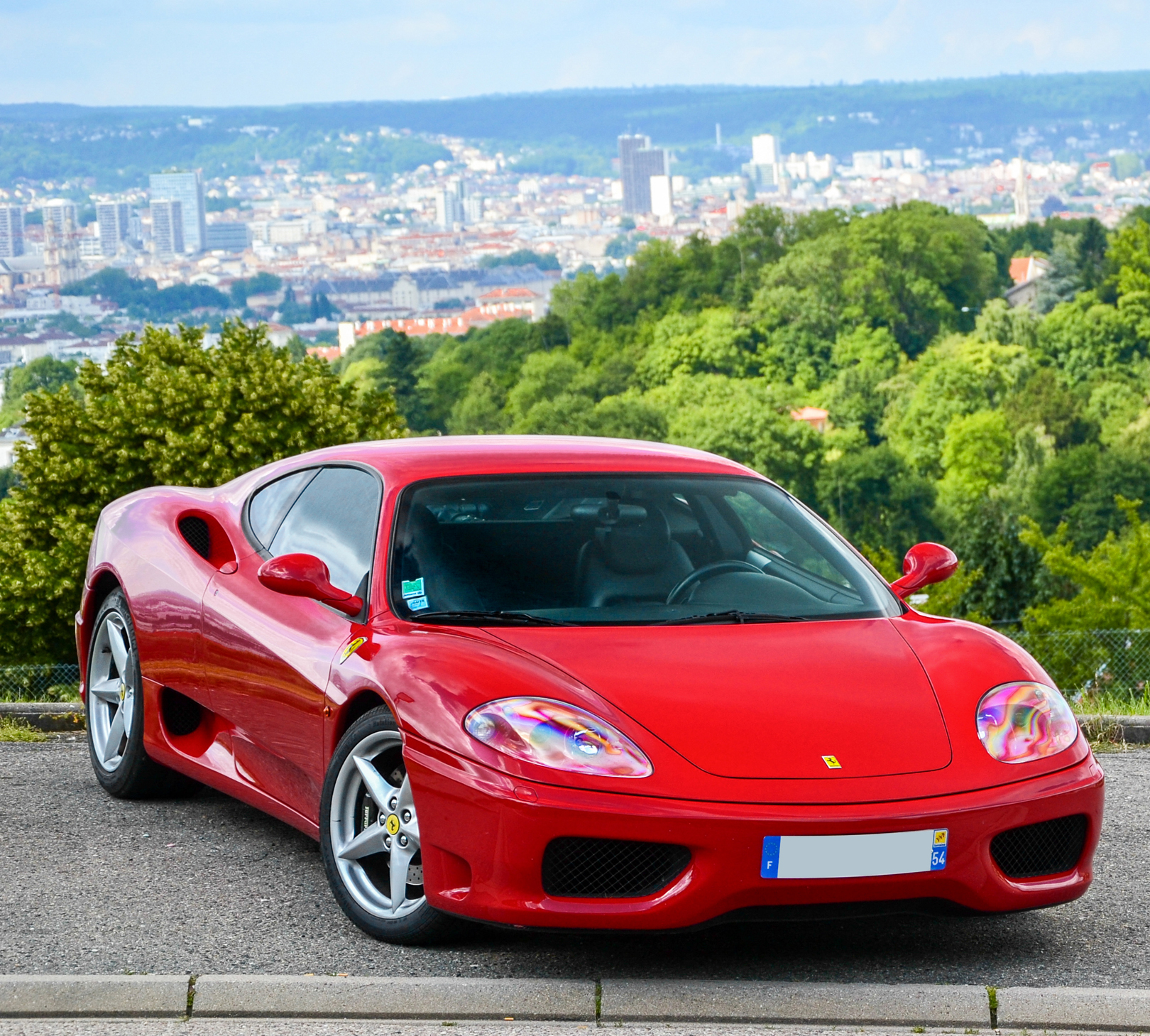
Ferrari 360 Modena (1999-2005)
Engine: 3.6L V8, 400 hp | Price range: $80,000-$120,000 (F1) / $150,000-$250,000 (manual)
The 360 Modena represented a leap forward for Ferrari. Its aluminum space frame construction, 400 hp V8, and dramatically improved build quality over the F355 made it the most livable mid-engine Ferrari to date. It's the car that proved Ferrari could build a car that was both viscerally exciting and reasonably reliable.
With around 17,650 units produced across all variants, the 360 Modena is an evolution in Ferrari's production strategy, blending performance with usability. The manual gearbox versions are particularly desirable, with prices for well-kept examples reaching up to $250,000. The 360's more modern approach to construction and design has made it a favorite among those who plan to drive their Ferraris regularly.
Pros:
- The most powerful of the three, with genuinely quick performance (0-60 in ~4.2 seconds)
- Aluminum construction means far fewer rust concerns than steel-bodied Ferraris
- More reliable than the F355, with lower routine maintenance costs
- The F1 gearbox, while imperfect, is livable for daily use
- Strong parts availability through Ferrari's classic parts program
Cons:
- The F1 transmission ages poorly — actuators, pumps, and sensors can be expensive to repair
- Manual examples are significantly more expensive
- Timing belts still need regular replacement (though, unlike the F355, without pulling the engine)
- Some consider the interior less characterful than the older cars
- The exhaust note, while good, doesn't match the F355's
Best for: The buyer who wants to actually use their Ferrari regularly. The 360 is the most practical choice for someone who will drive their car weekly rather than saving it for sunny Sunday mornings.
Buying Tips for Aspiring Ferrari Owners

Navigating the world of used Ferraris requires careful consideration and a good deal of research. Here are some essential tips to help make the process smoother:
- Pre-Purchase Inspection (PPI): Always invest in a PPI by a Ferrari specialist. This is crucial to uncover potential hidden issues that could become costly repairs.
- Service History: A comprehensive service history is invaluable. Look for cars with documented maintenance records, particularly for major services like timing belts and clutch replacements.
- Ownership Costs: Beyond the purchase price, budget $5,000-$10,000 annually for maintenance. This varies by model and condition, but it's a good baseline.
- Community and Clubs: Join Ferrari owner clubs and forums. These communities are a great resource for finding reputable service providers and parts suppliers.
- Insurance: Ferrari insurance can be expensive. Shop around for classic car insurance policies that offer agreed value coverage.
The Verdict
| Factor | 308 GTS | F355 | 360 Modena | |--------|---------|------|------------| | Purchase Price | $60-120k | $120-180k (manual) | $80-120k (F1) | | Running Costs | Medium | High | Medium-High | | Performance | Modest | Strong | Strong | | Sound | Excellent | Extraordinary | Very Good | | Reliability | Good (if maintained) | Demanding | Good | | Appreciation | Strong | Moderate | Good (manual only) |
There's no wrong answer here. Each of these Ferraris offers something the others cannot. The 308 gives you timeless beauty and rising values. The F355 gives you the most intoxicating driving experience. The 360 gives you the most livable package.
The best first Ferrari is the one you can afford to buy and maintain properly. Budget at least $5,000-$10,000 per year for maintenance on top of the purchase price, get a pre-purchase inspection from a Ferrari specialist (not a general mechanic), and buy the best example you can find rather than the cheapest.
Welcome to the club.